
Hair Loss 101
Sugar Land, TX
REDEFINING YOUR HAIR JOURNEY
Hair Loss 101

Feeling overwhelmed by thinning hair? You’re not alone, and the first step towards revitalizing your hair begins here. From hormonal imbalances to lifestyle factors, we’re here to shed light on each aspect that could be affecting your hair health. Dive in to discover the science behind hair loss and gain practical solutions tailored to your unique needs, paving the way for a future filled with confidence and stronger, healthier hair.
CAUSES, TYPES, & BIOLOGICAL PROCESSES
Understanding Hair Loss
Hair loss can be a daunting experience, affecting millions worldwide, and understanding its causes and types is essential in finding the right solutions. Hair loss, also known as alopecia, can be attributed to various factors including genetics, hormonal imbalances, medical conditions, and lifestyle influences.
One of the most common causes is androgenetic alopecia, which manifests as male or female pattern baldness. This condition is heavily influenced by genetic predisposition and the effect of hormones like dihydrotestosterone (DHT).
In contrast, temporary hair loss can occur due to stress, poor nutrition, or medical conditions such as thyroid disorders, where the hair follicles are affected temporarily, leading to shedding and thinning.
Understanding these differences and the biological processes behind hair growth, such as the hair growth cycle involving anagen, catagen, and telogen phases, is crucial in determining effective treatments. To combat hair loss, it is vital to adopt a multidisciplinary approach that may include medical interventions and lifestyle modifications tailored to individual needs.
By recognizing the signs early and identifying the root causes, individuals can take proactive steps towards preventing further hair loss and promoting healthier hair.
HAIR LOSS
The Role of Hormones
Hormones play a pivotal role in the health and growth of hair, with imbalances often leading to significant hair loss. Key players include androgens like testosterone and its derivative, dihydrotestosterone (DHT). Elevated levels of DHT are closely linked to androgenetic alopecia, where hair follicles shrink, resulting in thinner and eventually lost hair.
Hormonal changes due to menopause, andropause, thyroid dysfunction, or polycystic ovary syndrome (PCOS) can impact hair density and quality. Recognizing these hormonal influences is crucial for accurately diagnosing hair loss and tailoring effective treatments, such as hormone replacement therapy (HRT), to rebalance hormones and reduce their impact on hair follicles.

HAIR LOSS
Symptoms to Watch For
Recognizing early symptoms of hair loss is crucial for effective intervention. Here are some common warning signs to watch for:
• Excessive Hair Shedding: Noticeable amounts of hair lost during showering or brushing, leading to clogged drains or hair-covered brushes.
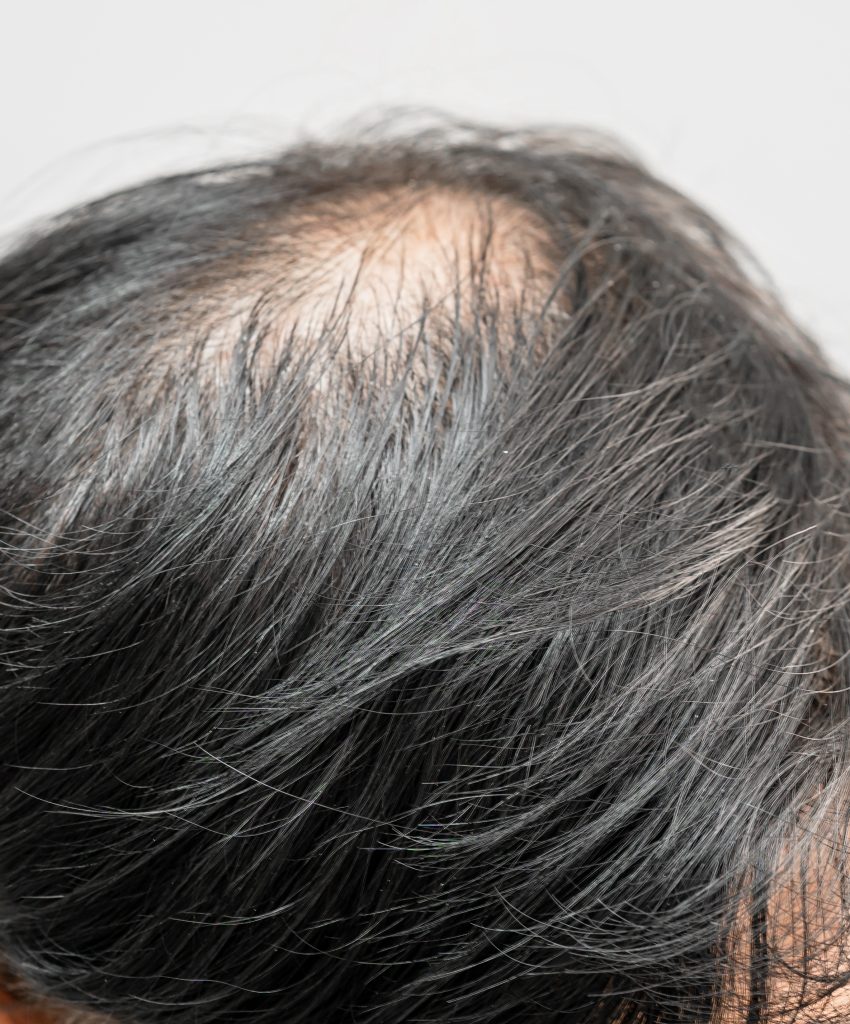
• Hair Thinning: A reduction in hair volume, resulting in a more visible scalp and less dense appearance.
• Bald Patches: The development of bald spots on the scalp or other body areas, which can appear gradually or suddenly.
• Texture Changes: Hair becoming brittle or finer, which may signal underlying issues.
Being aware of these symptoms and getting a consultation can help diagnose the type of hair loss and establish an effective treatment plan.
WHAT TO EXPECT
Treatments & Solutions
Hair loss can be a challenging issue, but there are numerous treatment options available, ranging from medical interventions to natural solutions, providing a variety of approaches to suit individual needs.
Medical Treatments
Hormone Replacement Therapy (HRT):
Often used to address hair loss related to hormonal imbalances, HRT can help restore hormone levels and promote hair growth.
Finasteride:
A prescription medication that helps to prevent hair loss by inhibiting the production of a hormone associated with thinning hair.
Minoxidil:
An over-the-counter topical treatment that stimulates hair follicles and encourages growth, commonly used for both men and women.
Platelet-Rich Plasma (PRP) Therapy:
This treatment involves injecting concentrated platelets from your own blood into the scalp to promote hair growth and improve hair density.
FUE Hair Transplant:
Follicular Unit Extraction (FUE) is a minimally invasive surgical technique that involves extracting individual hair follicles from a donor site and transplanting them to thinning or balding areas.
Natural Approaches
Diet and Nutrition:
Ensuring a balanced diet rich in vitamins and minerals can support hair health. Nutrients like biotin, zinc, and omega-3 fatty acids are known to benefit hair growth.
Scalp Massages:
Regular scalp massages can improve blood circulation to the hair follicles, which may enhance hair growth.
Each of these treatments has its own benefits and considerations, and it’s important to consult to determine the most suitable approach based on individual circumstances and health needs.
RENEW HAIR CLINIC
Schedule Your Hair Consultation Today!
At Renew Hair Clinic, we are dedicated to providing exceptional aesthetic solutions. Dr. Dhara Patel, our esteemed physician, takes great pride in offering services customized to your unique needs. We understand that your hair is as individual as you are, deserving personalized care and attention.
Whether it's a hair consult or any other service, we meticulously design each treatment to meet your specific requirements. Experience a truly personalized approach to hair care at Renew Hair Clinic.
FREQUENTLY ASKED QUESTIONS
Hair Loss FAQ
What causes hair loss?
Hair loss can be caused by a variety of factors including genetics, hormonal imbalances, medical conditions, medications, stress, and poor nutrition.
Is hair loss hereditary?
Yes, hereditary factors play a significant role, particularly in conditions like androgenetic alopecia, which is commonly known as male or female pattern baldness.
Can stress lead to hair loss?
Yes, stress can trigger a type of hair loss known as telogen effluvium, which causes hair follicles to enter a resting phase, leading to increased shedding.
Are there effective treatments for hair loss?
There are several treatments available, including medications like minoxidil and finasteride, hormonal therapies, Hair PRP, FUE Hair Transplant, TED Hair Restoration and lifestyle changes. The effectiveness varies depending on the cause and type of hair loss.
How does diet impact hair health?
A balanced diet rich in vitamins, minerals, and proteins can support hair health. Deficiencies in essential nutrients like iron, biotin, and vitamin D can contribute to hair loss.
Does hair loss affect men and women differently?
While hair loss can affect anyone, patterns and underlying causes can differ. Men typically experience receding hairlines, while women may notice diffuse thinning across the scalp.
Can hair loss be reversed?
In some cases, particularly when caused by temporary factors like stress or nutritional deficiencies, hair loss can be reversed. Chronic conditions might require ongoing management.
Is hair loss a sign of a more serious health issue?
It could be. Conditions like thyroid disorders or anemia can cause hair loss. It's important to consult for a comprehensive evaluation.
How do hormones influence hair loss?
Hormones like DHT can shrink hair follicles, leading to hair loss in androgenetic alopecia. Hormonal changes due to menopause or thyroid disorders can also affect hair health.
Should I come in for my hair loss?
If you experience sudden or excessive hair loss, we can help identify the cause and suggest appropriate treatments. Early intervention can be key to managing hair health effectively.
TESTIMONIALS
5 Star Reviews
I tried the hair PRP treatment with Dr. Patel for my hair loss, and I can't recommend her enough. From start to finish, she was knowledgeable, professional, and genuinely caring. Dr. Patel explained every step of the PRP process, making sure I was comfortable and informed. Her skills with the injections were spot-on. The results have been amazing—my hair looks thicker and fuller, and my scalp feels way healthier. If you're looking for effective hair restoration, Dr. Patel is the way to go. She's truly top-notch!
A Patel🌟🌟🌟🌟🌟
I had a hair transplant done by Dr. Patel, and I'm beyond thrilled with the results! From the initial consultation to the follow-up appointments, she made the entire process smooth and stress-free. Dr. Patel took the time to understand my concerns and tailored the procedure to fit my needs. Her expertise and attention to detail are unparalleled. The recovery was quicker than expected, and my hair looks incredibly natural. If you're considering a hair transplant, I highly recommend Dr. Patel. She’s the best in the field!
R Khan🌟🌟🌟🌟🌟
I recently went through the TED Hair Restoration treatment with Dr. Patel, and wow, what a game-changer! Dr. Patel is just amazing—super friendly and totally knows her stuff. The whole process was non-invasive and surprisingly comfortable. No needles or surgery, just advanced tech and some relaxing vibes. My hair already feels thicker and healthier, and I'm loving the progress. If you need hair restoration, definitely go see Dr. Patel. She's incredible at what she does!
P Contreras🌟🌟🌟🌟🌟
Dr. Patel is a lifesaver! I was worried about hair loss while on testosterone therapy, but she knew exactly what to do. Her approach was spot-on, combining several treatments that worked perfectly with my situation. Dr. Patel is very knowledgeable and put me at ease right from the start. She's instantly your best friend. Can't stress enough how grateful I am—my hair is thriving, and I couldn't be happier!
C Myers🌟🌟🌟🌟🌟
Previous
Next